Stage Design — Stage lighting
Stage lighting lines for venues
Stage lighting is the performance-area end of the stage line: the fixtures the audience actually watches, dressed by the floods and strings around them.
STAGE LIGHTING — THE PERFORMANCE-AREA SUB-FAMILY
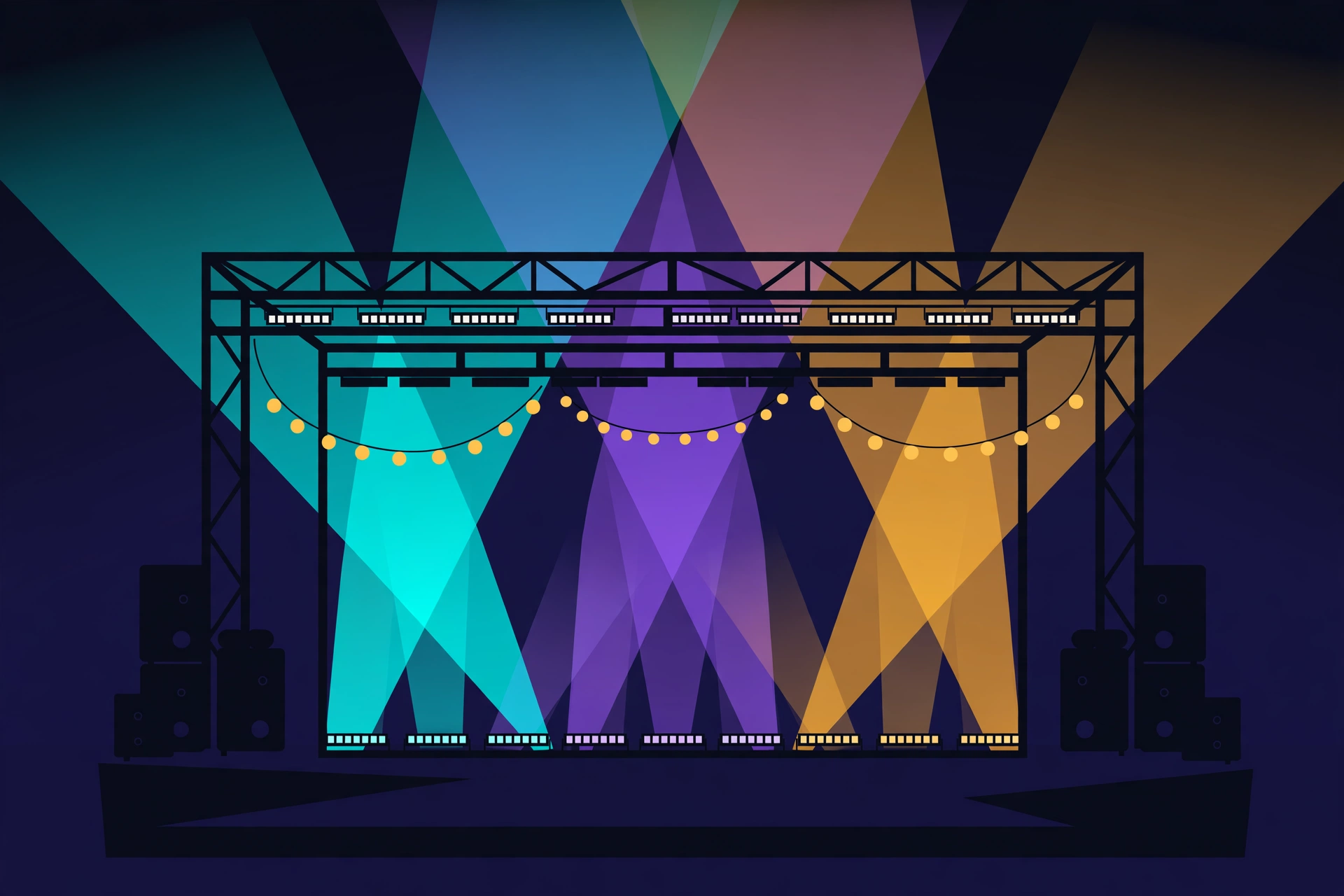
Three lines, one rig
This sub-family is presented at family level: the maker's taxonomy lists stage lights as a sub-category of the stage line, and the spec-published models that serve stage work sit in the neighbouring sub-families — the flood model for washes and the string model for decoration. A venue inquiry therefore usually assembles all three, so plan the rig as one assembly: the wash, the decoration and the focus chosen against each other, not one at a time.
Request the specification sheet for the model you need when a stage programme names a fixture type the published pages do not cover; the answer comes back against the venue, the throw and the show.
- Divide the picture: wash, line and focus, in that order.
- Specify the three lines together, in one inquiry.
- Hold one spare of each line at the venue.
Building a stage look from three lines
A workable stage picture divides labour. Floods set the colour field. Strings and strip draw the lines the eye follows — truss edges, scenic frames, entrance arches. Performance fixtures carry the focus. Specifying them together, in one inquiry, keeps colour rendering and control consistent across the rig instead of reconciling three separate purchases at load-in.
Consistency is not an aesthetic nicety here; it is a colour problem. Three purchases made in three months from three pages will render the same nominal colour three slightly different ways, and a stage is the one environment where the audience compares them side by side, live, for two hours. One inquiry, one production context and one conversation about colour is how a rig avoids being almost matched.
The blog's stage decoration article builds one such picture step by step, with strip doing the scenic edges.
Before you order
Ask which configuration in this series fits your project — one form covers every line, and the reply quotes against your model, quantity and destination.