Blog
How to choose an LED controller for pixel lights
A controller for pixel lights is not a generic box with outputs; it is the other half of a specific conversation with specific pixels. The companion article on this blog argues that the controller is chosen last, after the lights. This one takes the next step: given the lights, what exactly does the choosing consist of? Three facts decide it, in order — the protocol the pixels speak, the number and arrangement of points, and the programme the sequence must perform. A controller that satisfies all three is a component. One that satisfies two is a project risk with a power supply attached.
BLOG — PROTOCOL, POINTS, PROGRAMME: IN THAT ORDER
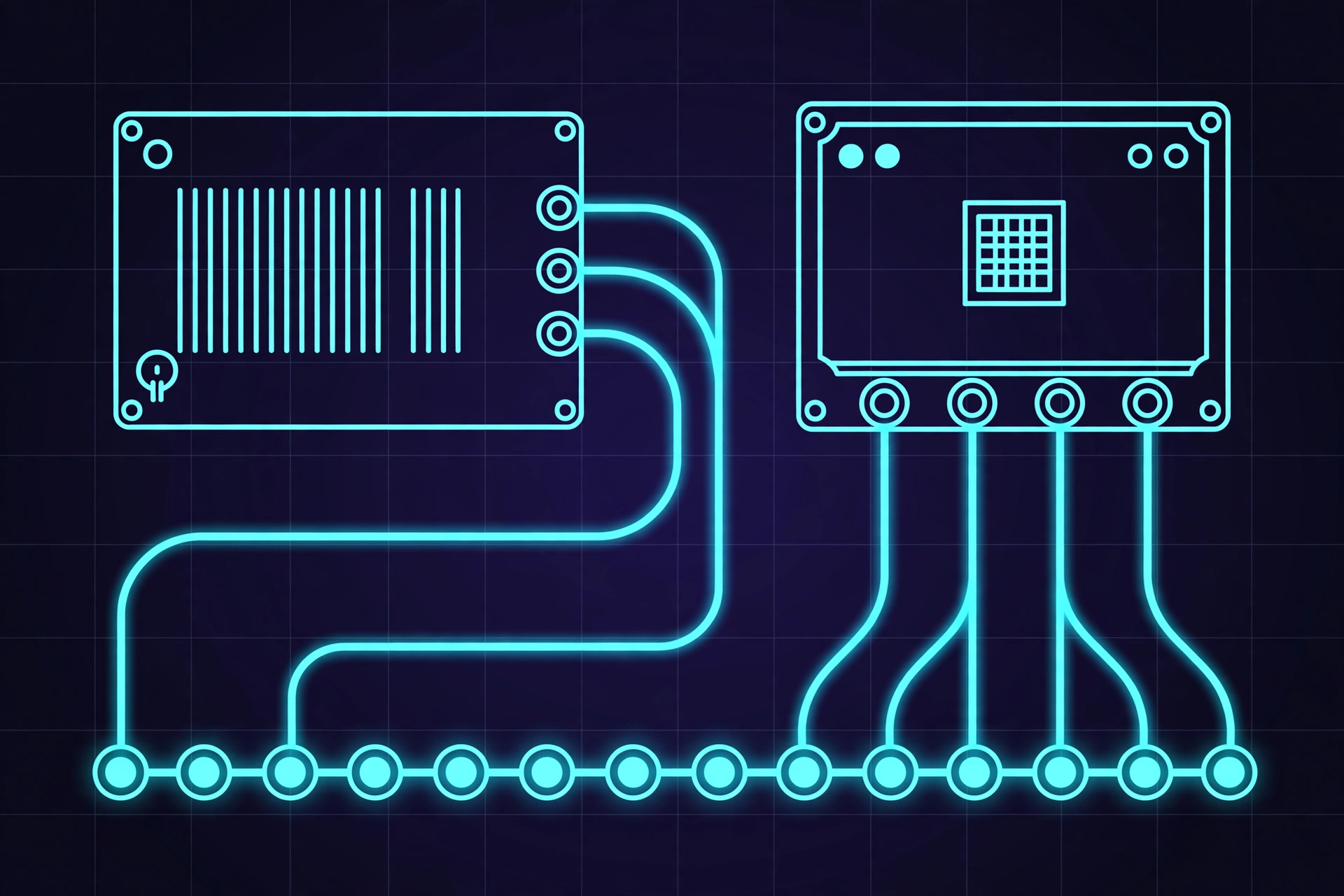
The controller question, from the pixels outward
The catalogue's programmable string states on its own page that it works with an LED controller of a named model class. Treat that as the shape of a correct answer: the light's maker points at the control family, and the buyer's work is to size and place it — not to wander the market comparing unrelated boxes.
Protocol and points: the fixed facts
Protocol is not a preference. Pixel types differ in how they receive their instructions, and a controller that cannot speak a string's language cannot be persuaded by settings. Confirm the pairing from the light's side — its page, its maker — and treat any controller sold as universal with the suspicion universality has earned in every other branch of electronics.
Points and their arrangement come from the drawing, not the datasheet. Count the pixels, then look at their geography: a single long outline spends a controller's capacity differently from twenty short features, and long data runs have their own practical limits that push control toward the structure — several modest units near their features, rather than one proud unit at a heroic distance. The drawing answers this; count from it, and add the features the venue is already sketching for next season, because capacity bought twice is the most expensive kind.
Mismatches announce themselves in recognisable ways, and reading them saves days. Colours that arrive in the wrong order — a chase that runs green where red was drawn — point to a channel-order difference between the pixel type and the controller's assumption. A run that lights for its first section and then freezes or repeats points to addressing: the controller's map and the run's actual order disagree. Random flicker at brightness, calm at dim, is usually neither: it is power, starving at the far end and masquerading as a data fault. Each symptom names its own conversation — protocol, mapping or feed — and a buyer who can report the symptom precisely gets the right answer from the pairing questions instead of a replacement box.
The programme decides the class
What the sequence must do sorts controllers into classes more plainly than price does. A stored-effects unit suits a fixed outline that performs the same pleasant programme nightly. A scene-based unit suits designed shows — the themed ride, the sponsor's sign, the stage that tours. Live control suits venues whose lighting desk already runs the room. Buying a class above the programme wastes money; buying below it wastes the installation, because the shortfall is discovered at the first event that asks for more.
Keep the programme files. A controller's scenes are project documents, like drawings: they belong in the venue's records, with a configured spare where the show cannot stop. The number of installations running on one person's laptop, one festival from darkness, is the industry's quiet scandal; do not add yours to it.
Commissioning day is when the handover either happens or doesn't. The programme files are copied to the venue's own storage, the point map is printed and filed with the wiring order, and one member of the venue's crew runs the sequence once from a cold start while the installer watches. Fifteen minutes, once — and the installation stops depending on the installer's laptop, memory and continued existence as a business.
When the answer is two controllers
There is a moment in many projects where one large controller stops being the elegant answer. The runs are far apart; the features belong to different structures with different crews; a single failure would darken too much of the site at once. Two modest controllers, each near its own lights, trade a small amount of theoretical efficiency for shorter data runs, simpler fault-finding and failures that stay local. The drawing usually announces this moment plainly — control wants to live where the lights are — and the buyer who reads it there avoids the heroic central cabinet and its long, vulnerable data runs.
Duplication has a second dividend: consistency becomes a maintenance tool. Two identical units, configured alike, can be swapped in diagnosis — is the fault in the box or in the run? — which is the first question every dark structure asks. A site standardised on one controller class, with one configured spare, has quietly bought itself a troubleshooting method along with its hardware.
The second-hand and spare-unit question
Controllers tempt buyers toward second-hand bargains more than any other component in the line, because the box looks identical to its new self. Resist on evidence grounds: the unit's history — its firmware state, its configuration, the treatment of its outputs — is undocumented, and the component being bought is precisely the one whose behaviour must be known. A component whose facts cannot be stated is not a saving but a risk with a price attached — and with a controller, that price is usually discovered at commissioning, in front of an audience.
The legitimate version of the impulse is the spare bought new with the system, configured at commissioning and stored with the project records. It costs more than the bargain and less than the first dark weekend, and unlike the bargain it arrives with its facts known.
Asking the question well
An inquiry that names the light model, the point count from the drawing, the run arrangement and the programme's ambition will be quoted a controller that works. That is the whole method: the pixel-controller page collects the pairing questions, and the answers, sent with the light order, turn a controller from a gamble into a line item that can be checked, priced and replaced like any other part of the order.
Keep the answers with the order they produced. Years later, when a second phase is planned or a controller is replaced, that single page of questions and answers is the difference between extending a system and starting an archaeology project. Control is the part of a lighting installation with the longest memory; give it a written one.
Before you order
Sourcing light lines like these? Talk to the sales team — one form covers every line, and the reply quotes against your model, quantity and destination.